The Hidden Costs of Nicotine Pouches: What the Science Says and How to Find a Better Baseline
Why You Should Switch
The modern pursuit of productivity often comes with a chemical catalyst. For decades, it was coffee. Then came the era of sugary energy drinks. Today, the landscape is dominated by a new, rapidly growing trend: synthetic nicotine pouches. Brands like ZYN, Rogue, and VELO have exploded in popularity, aggressively marketing themselves as a clean, discreet, and spit-free way to maintain focus, manage stress, and power through the workday.
Walk into any office, gym, or gaming space, and you will likely spot the telltale cylindrical tins. The appeal is understandable. In a hyper-competitive world, the promise of an instant, discreet cognitive boost without the stigma or odor of smoking or vaping is highly attractive. However, beneath the sleek branding and the seemingly harmless white pouches lies a complex web of physiological interactions.
The framing of these products as a harmless "lifestyle hack" has outpaced the general public's understanding of nicotine's biological impact. While they are undoubtedly safer than combustible tobacco—which introduces tar and thousands of carcinogens into the lungs—safe is a relative term. Nicotine, even when isolated and synthesized in a laboratory, remains a highly potent, biologically active stimulant with profound effects on the human body.
This deep dive explores the scientific reality of nicotine pouch usage, examining peer-reviewed studies to uncover the hidden costs of this modern habit, and introduces how nootropic alternatives like THRiYV are redefining what it means to fuel your focus.
The Neurological Hook: Hijacking the Reward Pathway
To understand the danger of nicotine, one must first understand its mechanism of action. Nicotine is an alkaloid that crosses the blood-brain barrier with astonishing speed—often within seconds of absorption through the oral mucosa. Once inside the brain, it binds to nicotinic acetylcholine receptors (nAChRs).
This binding triggers a massive, rapid release of several neurotransmitters, the most notable being dopamine. Dopamine is the brain's primary reward chemical, responsible for feelings of pleasure, satisfaction, and motivation. When a user places a traditional nicotine pouch in their lip, the ensuing dopamine flood creates a temporary sensation of heightened alertness, elevated mood, and sharp focus.
However, the brain is an adaptive, highly efficient machine designed to maintain homeostasis. According to research published in the Journal of Neuroscience, chronic exposure to nicotine forces the brain to adapt to this artificial dopamine flood. It does so by desensitizing existing receptors and growing new ones, a process known as upregulation.
This is the biochemical foundation of dependency. As upregulation occurs, the user requires more nicotine just to reach their baseline state of normalcy. The "boost" they once felt disappears, replaced by the necessity to use a pouch simply to stave off the brain fog, irritability, and lethargy of withdrawal. What began as a tool for extra productivity rapidly devolves into a maintenance routine. You are no longer using the pouch to get ahead; you are using it to stop falling behind.
Cardiovascular Consequences: The Silent Strain

Perhaps the most significant concern regarding isolated nicotine use lies in its cardiovascular impact. Nicotine is a potent sympathomimetic drug, meaning it activates the sympathetic nervous system—the body's "fight or flight" response.
When the sympathetic nervous system is triggered, the adrenal glands release epinephrine (adrenaline). This causes a cascade of physiological responses. A comprehensive review published by the American Heart Association (AHA) details how nicotine directly induces vasoconstriction, the narrowing of blood vessels.
Vasoconstriction forces the heart to work significantly harder to pump blood throughout the body. The AHA research indicates that nicotine consumption leads to an acute increase in both heart rate and blood pressure. For a healthy individual, a temporary spike might not seem catastrophic. But for a chronic pouch user—someone who keeps a pouch in their mouth for hours at a time, continuously absorbing the stimulant—the cardiovascular system is placed under a state of prolonged, unnatural stress.
Furthermore, a study published in the Journal of the American College of Cardiology highlighted that chronic nicotine exposure can lead to endothelial dysfunction. The endothelium is the thin membrane that lines the inside of the heart and blood vessels. When it is impaired, the risk of atherosclerosis (the hardening and narrowing of arteries) increases, laying the groundwork for severe, long-term cardiovascular disease.
Even without the smoke, nicotine itself is a cardiovascular stressor. Using high-milligram pouches throughout the day keeps the vascular system in a perpetual state of tension, entirely contrary to the foundations of long-term health and wellness.
Gastrointestinal and Oral Health Risks
While nicotine pouches are marketed as "spit-free," the reality of their use dictates that the user is continuously swallowing nicotine-infused saliva. This introduces the alkaloid directly into the gastrointestinal tract.
Medical literature, including studies from the World Journal of Gastroenterology, has established that nicotine relaxes the lower esophageal sphincter—the muscular ring that prevents stomach acid from flowing backward into the esophagus. This relaxation significantly increases the incidence of acid reflux and Gastroesophageal Reflux Disease (GERD). Many chronic pouch users report frequent heartburn, indigestion, and generalized stomach discomfort, often without realizing that their "clean" energy habit is the direct culprit.
Locally, the oral cavity takes a direct hit. The pouches are designed to be wedged between the lip and the gum, where the synthetic nicotine and flavoring agents aggressively permeate the mucosal tissue. Research published in the Journal of Clinical Periodontology has noted that localized, prolonged exposure to these pouches can cause mucosal lesions, gingival recession (receding gums), and chronic inflammation. Once gum tissue recedes due to chemical irritation, it does not grow back, leading to permanent dental vulnerability.
The Vicious Cycle: The Crash and Cognitive Fatigue
Beyond the physiological risks, the functional promise of nicotine—sustained productivity—is ultimately a biochemical illusion.
Nicotine has a relatively short half-life in the human body, typically around two hours. Because it processes so quickly, the dopamine and adrenaline spikes are short-lived. As the chemical leaves the bloodstream, the user experiences a steep crash. This crash is characterized by cognitive fatigue, a lack of concentration, and an intense craving for another pouch.
This creates a jagged, volatile energy curve. Instead of experiencing smooth, sustained focus throughout the workday, the user is trapped on a chemical rollercoaster. They are hyper-stimulated for an hour, followed by a period of mental depletion, prompting them to reach for another pouch. This cycle actively destroys deep, sustained focus, breaking the very flow states the user was attempting to achieve in the first place.
Redefining the Baseline: The Shift to Nootropics
Recognizing these compounding biological costs, many high-performers are actively seeking a way out of the nicotine cycle. They want to reclaim their cardiovascular health, stabilize their dopamine pathways, and eliminate the dependency. But the ritual of the pouch—the physical habit of placing it in the lip, the oral fixation, and the desire for a cognitive edge—is notoriously difficult to break.
This is where the landscape of performance enhancement is shifting. The modern solution isn't about giving up the edge; it’s about sourcing it from compounds that support human biology rather than hijack it.
Nootropics, often referred to as cognitive enhancers, are substances that can safely improve executive functions, memory, creativity, and motivation. Unlike nicotine, which forces a massive, unsustainable dump of neurotransmitters, high-quality nootropics work synergistically with the brain to support sustained cellular energy and optimal cognitive function without the crash or the chemical dependency.

Enter THRiYV: The Premier Nicotine Alternative
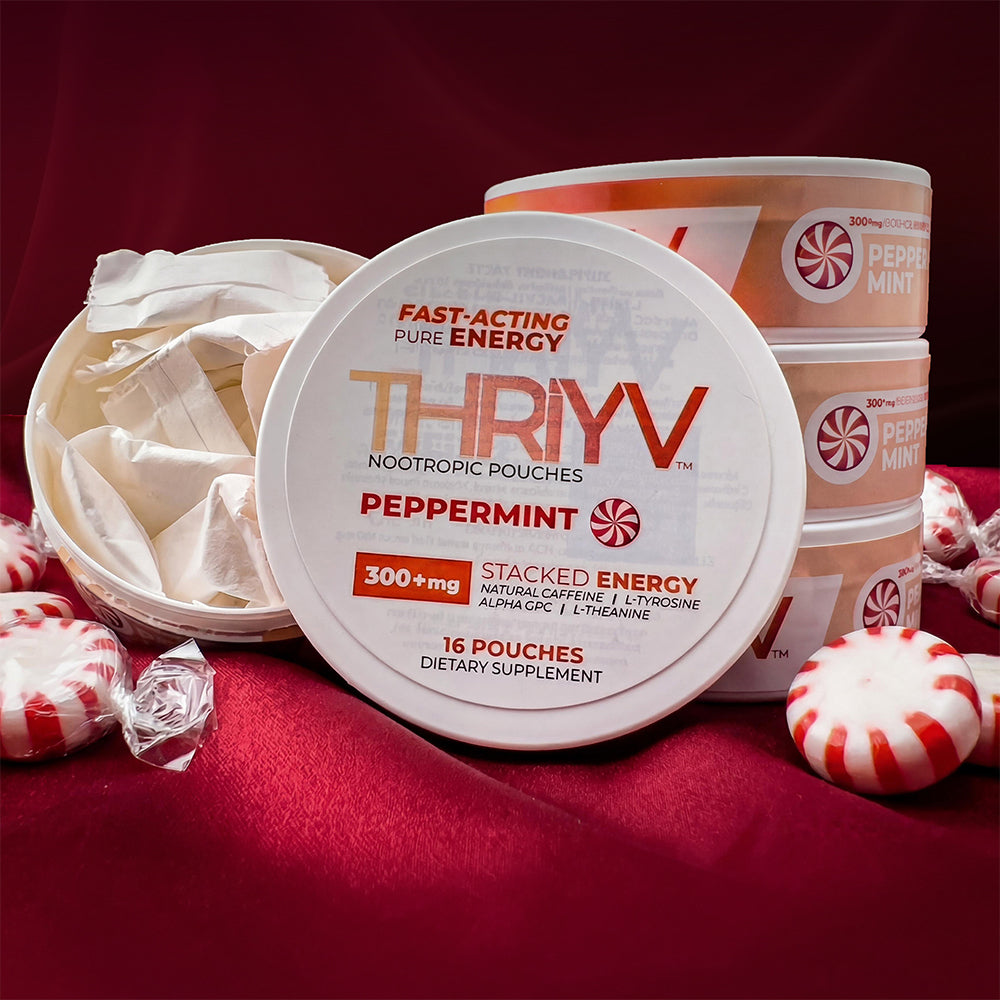
For those looking to break free from the risks of synthetic nicotine products, THRiYV Energy Nootropics represents the ultimate upgrade. THRiYV was engineered specifically for those who want to keep the ritual but drop the liability.
Instead of relying on the harsh, vasoconstricting jolt of nicotine, THRiYV utilizes a meticulously crafted blend of active nootropics delivered in a familiar, convenient pouch format.
1. Clean, Sustained Energy
THRiYV leverages precise, clean energy drivers that provide a smooth upward trajectory of focus. Without the rapid two-hour half-life crash of nicotine, users experience a sustained, plateaued alertness that carries them through intense work sessions, grueling workouts, or long gaming campaigns. You get the drive without the debilitating drop-off.
2. Cognitive Clarity, Not Chemical Dependency
The nootropic blend in THRiYV is designed to support mental acuity and clarity. Rather than hijacking the dopamine reward system and forcing receptor upregulation, these ingredients foster an environment where the brain can operate at its peak natural efficiency. It’s about unlocking your inherent potential, not borrowing energy from tomorrow to pay for today.
3. Zero Nicotine, Zero Tobacco
By completely eliminating nicotine, THRiYV entirely bypasses the cardiovascular strain, the vasoconstriction, and the heightened blood pressure associated with traditional pouches. It removes the threat of severe dependency, allowing you to use the product as a tool for enhancement rather than a crutch for maintenance.
4. Preserving the Ritual
Habit change is incredibly difficult when you try to eliminate a behavior entirely. THRiYV brilliantly bridges this gap by maintaining the exact physical ritual users are accustomed to. The weight of the tin, the tactile sensation of placing the pouch, and the immediate oral feedback are all preserved. You get to keep the habit; you just upgrade the software running it.
Conclusion
The science is clear: the modern convenience of synthetic nicotine pouches carries a heavy, hidden tax on cardiovascular health, gastrointestinal comfort, and neurological baseline function. The promised productivity boost is ultimately overshadowed by the burden of dependency and the physical toll of chronic sympathetic nervous system activation.
You don't have to sacrifice your edge to save your health. By transitioning to a scientifically engineered nootropic alternative like THRiYV, you can maintain the focus, keep the ritual, and finally step off the nicotine rollercoaster. It’s time to stop treating your focus like a borrowed resource and start fueling it with clean, sustainable, and entirely nicotine-free energy. Choose the upgrade. Choose THRiYV.
Scientific References & Further Reading
The Neurological Basis of Dependency & Upregulation
"Long-term effects of chronic nicotine exposure on brain nicotinic receptors" (PNAS). This research details how the brain's acetylcholine receptors adapt to artificial dopamine floods, creating dependency.
Link: https://www.pnas.org/doi/10.1073/pnas.0702698104
Cardiovascular System Stress & Vasoconstriction
"Nicotine and the cardiovascular system: unmasking a global public health threat" (European Heart Journal). A comprehensive look at how nicotine activates the sympathetic nervous system, causing acute blood pressure spikes and arterial narrowing.
Link: https://academic.oup.com/eurheartj/article/47/15/1764/8377624
Endothelial Dysfunction and Long-Term Heart Health
"Nicotine induces endothelial dysfunction and promotes atherosclerosis via GTPCH1" (PMC). This study explores the structural changes and long-term arterial hardening risks associated with chronic nicotine use.
Link: https://pmc.ncbi.nlm.nih.gov/articles/PMC6201367/
Gastrointestinal Impacts & GERD
"Smoking and GERD: How Nicotine Weakens the Gastric Valve, Triggering Acid Reflux". Literature documenting how ingested nicotine relaxes the esophageal sphincter, contributing to chronic heartburn.
Oral Mucosa and Acid Reflux Mechanisms
"Mechanism of acid reflux associated with cigarette smoking" (ResearchGate). An examination of the momentary relaxation of the lower esophageal sphincter and tissue changes caused by nicotine use.